Designing a garden is an exciting creative journey, but behind every beautiful outdoor space is a great deal of careful planning, technical understanding, and thoughtful decision-making.
A successful garden design is never just about choosing a few paving slabs or plants. It’s about understanding how a space will be used, how it will evolve through the seasons, and how every element — from structure to planting — works together to create a cohesive and enjoyable environment.
At Harris Garden Design & Landscaping, we work with clients across Bolton, Greater Manchester and the North West to create gardens that are both visually striking and practical to live with. Our process is designed to make the journey from the first idea to the finished garden clear, collaborative and enjoyable.
Every project is different, but most follow a similar design pathway that allows ideas to develop naturally while ensuring every detail is carefully considered.
Initial Consultation – Understanding the Garden and the Vision
Every garden project begins with a visit to the property.
This first meeting is one of the most important stages of the entire process because it allows us to properly understand both the physical space and the people who will use it.
We spend time walking around the garden with the client, discussing how the space currently works and what they would love it to become.
Some of the things we explore during this stage include:
- How the garden is currently used
- Areas that feel underutilised or awkward
- Sunlight patterns and shade
- Existing levels and drainage considerations
- Privacy and neighbouring views
- Access points and circulation through the garden
- Maintenance expectations
- The overall feeling the client would like the garden to have
For some people, the garden might be primarily a place to entertain family and friends. For others, it may be a quiet retreat filled with planting and seasonal colour.
Understanding these priorities allows us to design a garden that genuinely reflects the way the client lives.
We also use this time to discuss style preferences, whether that leans towards contemporary garden design, a softer naturalistic feel, or something that sits somewhere between the two.
Concept Design – Bringing the Garden Together
Once we understand the garden and the client’s aspirations, the next stage is developing the concept design.
This is where the creative work really begins.
A concept design focuses on the overall layout and structure of the garden, establishing how the space will flow and how different areas will connect.
This stage often explores ideas such as:
- New patio and seating areas
- Outdoor dining spaces
- Pathways and circulation routes
- Raised beds or retaining walls
- Feature trees or focal planting areas
- Water features or architectural elements
- Outdoor kitchens or pergolas
- Lawn areas for children and families
The aim at this point is not to finalise every tiny detail, but to create a strong, balanced design framework that brings the garden together as a complete space.
A well-considered layout ensures that the garden feels intuitive to move through and that each area has a clear purpose.
Often this stage also involves balancing practical considerations, such as drainage, levels and access, with the visual aspects of the design.
3D Visualisation – Seeing the Garden Before It’s Built
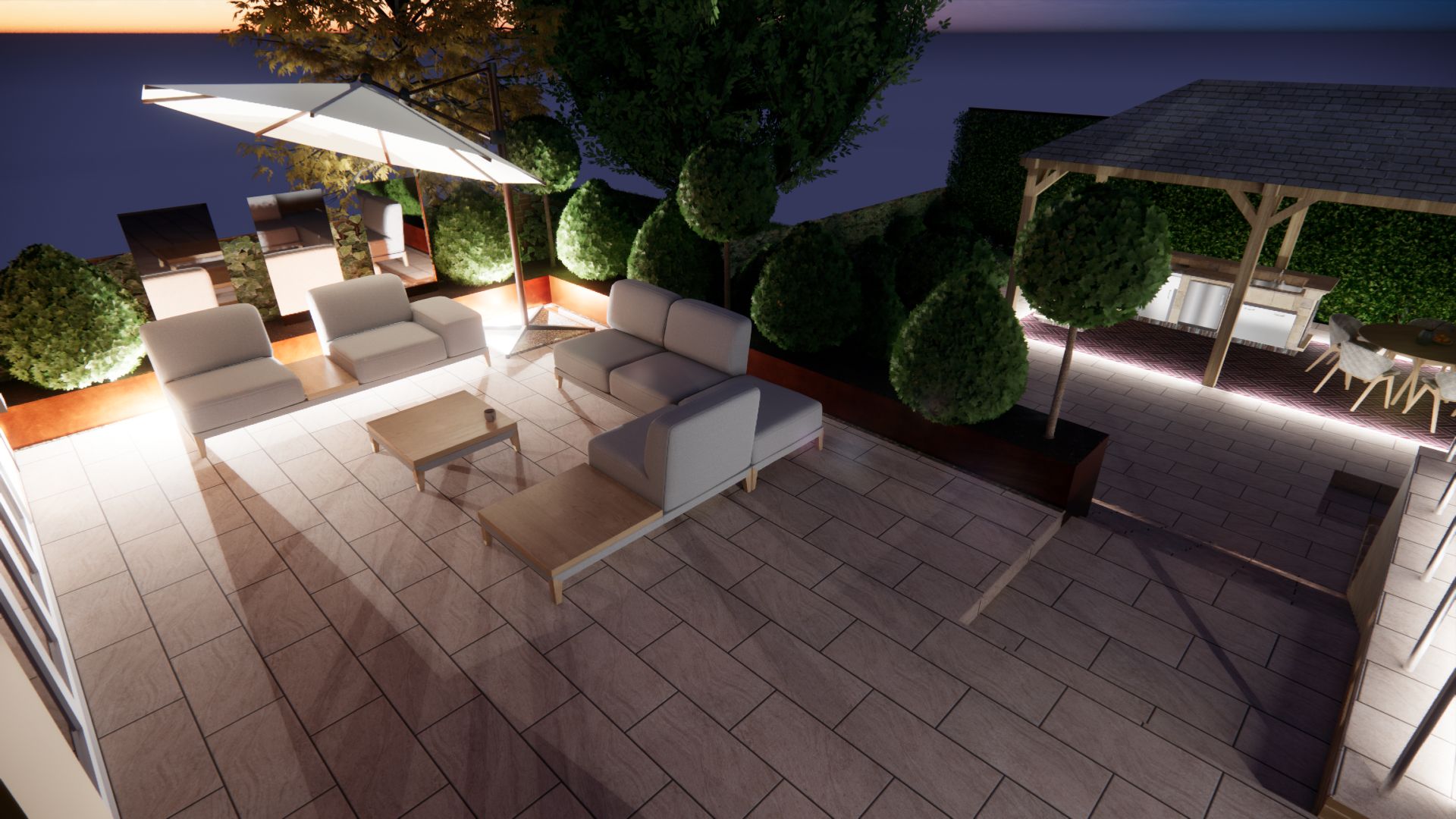
One of the most valuable tools in modern garden design is 3D visualisation.
Using advanced design software, we can create detailed models that allow clients to see how their garden will look before construction even begins.
This stage can be incredibly helpful because it allows everyone involved to fully visualise the finished space.
Clients are able to explore elements such as:
- The proportions of seating areas
- The relationship between structures and planting
- The height of retaining walls or pergolas
- The way materials work together
- Sightlines from the house and key viewpoints in the garden
Often, seeing the garden in three dimensions helps refine the design further.
Small adjustments can be made early in the process, ensuring the final design feels exactly right before moving into the build phase.
This approach gives clients confidence in the design and helps avoid uncertainty later in the project.
Technical Planning – Turning Ideas Into Buildable Drawings
Once the design concept is agreed, the next step is to translate those ideas into detailed technical drawings.
This stage is essential for ensuring the garden can be built accurately, efficiently, and to a high standard.
Technical drawings typically include:
- Construction layouts and levels
- Drainage details
- Sub-base and foundation specifications
- Material dimensions and setting-out plans
- Structural elements such as walls or steps
- Lighting layouts and service runs
- Planting plans
These drawings act as the blueprint for the construction team and ensure that every part of the garden is built precisely as intended.
Good technical planning is often what separates a garden that simply looks good on paper from one that functions beautifully in real life.
Construction – Bringing the Garden to Life
The final stage of the process is the transformation of the design into a completed garden.
This is where the ideas, drawings and materials all come together on site.
The construction phase typically includes:
- Excavation and ground preparation
- Installation of sub-bases and drainage
- Construction of patios, paths and steps
- Building retaining walls, raised beds or structures
- Installing pergolas, screens or outdoor features
- Preparing soil and planting areas
- Final planting and finishing touches
During this stage, careful attention to detail is essential. Good craftsmanship, correct installation methods, and high-quality materials all contribute to the long-term performance of the garden.
For us, one of the most rewarding moments is watching the space evolve from a bare site into a fully realised garden that reflects the original vision.
A Garden That Continues to Grow
Although the construction phase marks the completion of the build, a well-designed garden continues to evolve over time.
Plants mature, spaces soften, and the garden gradually develops its own sense of character.
This is one of the things that makes garden design so special. Unlike many other design disciplines, a garden is a living space that improves and deepens with each passing season.
When designed and built well, a garden becomes far more than just an outdoor area. It becomes a place for relaxation, gathering, and everyday enjoyment for many years to come.