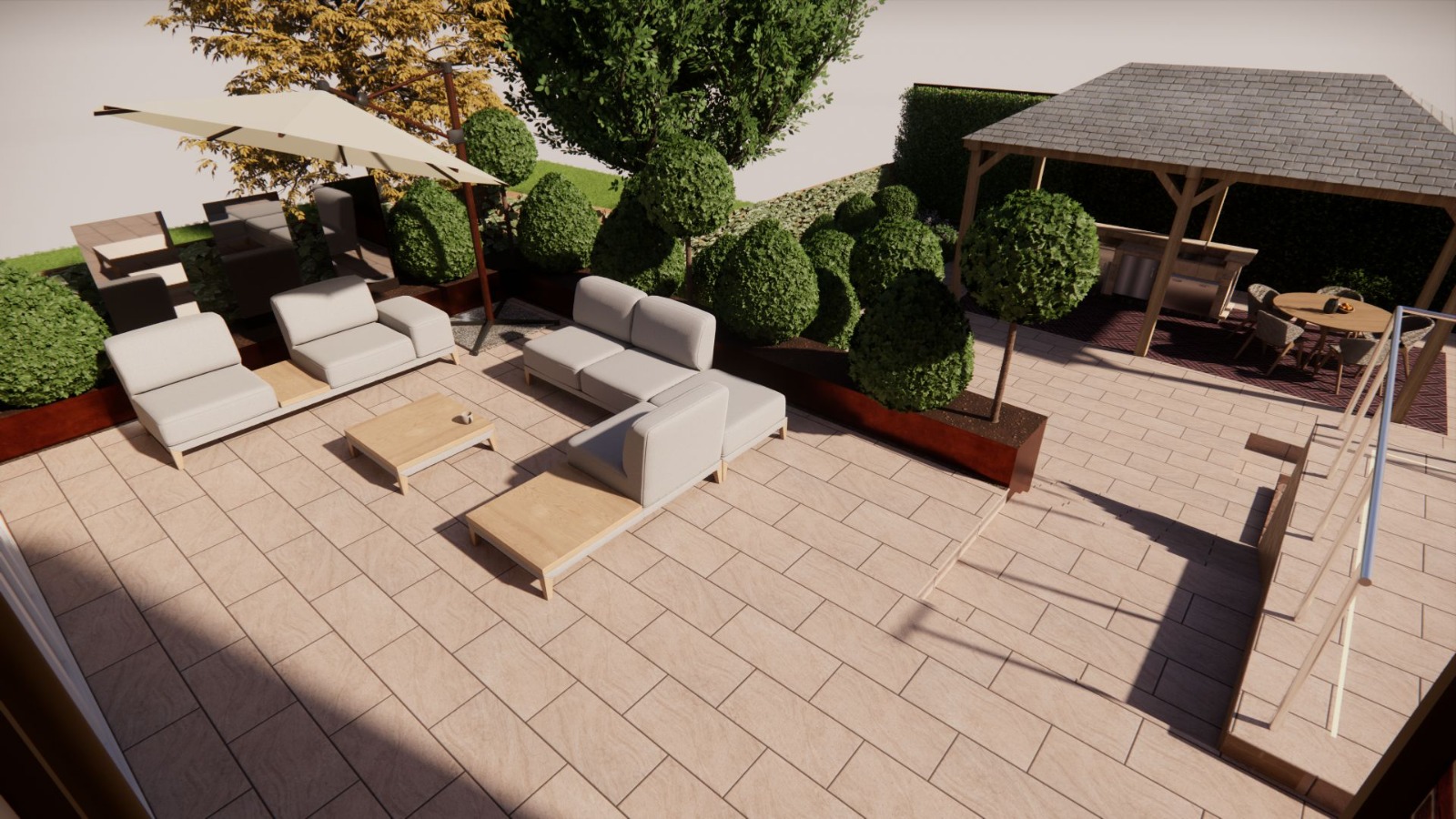
Choosing the right paving material is one of the most important decisions when designing a garden. A patio is rarely just a paved surface — it becomes the central outdoor living space where people sit with a morning coffee, entertain friends, watch children play on the lawn, or simply relax after a long day.
Because of that, the paving you choose has a huge influence on the overall character, performance, and longevity of the garden.
Two of the most popular options in modern garden design are porcelain paving and natural stone paving. Both materials can create beautiful patios, and both are used widely in high-quality landscaping projects. However, they are very different materials with different strengths, and understanding those differences can help you make the right decision for your garden.
As garden designers and landscapers, we spend a lot of time helping clients navigate this decision, and it usually comes down to a mix of design style, maintenance expectations, durability, and personal taste.
Understanding Porcelain Paving
Porcelain paving has grown enormously in popularity over the last decade and has become a defining feature of many contemporary garden designs.
Porcelain is a manufactured material made from refined clays and minerals, which are compressed under extremely high pressure and then fired in kilns at very high temperatures. This process produces an incredibly dense and durable slab with very low water absorption.
One of the reasons porcelain works so well in modern gardens is the clean, precise aesthetic it offers. Because the slabs are manufactured rather than quarried, they are extremely consistent in size, thickness and colour. This allows landscapers to achieve very crisp lines, narrow joints, and a highly controlled finish.
In contemporary garden design, where geometry, structure and simplicity are often key themes, porcelain paving fits beautifully.
- It pairs particularly well with features such as:
- Contemporary timber screens
- Modern water features
- Architectural planting schemes
- Steel edging and raised beds
- Outdoor kitchens and seating areas
Another major advantage of porcelain paving is its very low maintenance requirements.
Because the material is so dense, it is far less porous than most natural stones. This means it absorbs very little water, which in turn makes it highly resistant to staining, algae growth, and weathering.
In practical terms, this means porcelain patios tend to stay looking cleaner for longer. In most cases, they simply require occasional washing to maintain their appearance.
For many homeowners who want a low-maintenance garden, this is a major benefit.
The Character of Natural Stone
Natural stone offers a completely different aesthetic experience.
Where porcelain is precise and uniform, natural stone is full of variation, texture and character.
Materials such as Yorkstone, sandstone, limestone and slate are formed naturally over thousands or even millions of years. When these stones are quarried and cut into paving slabs, they retain subtle variations in colour, grain and surface texture.
This natural variation is exactly what gives stone patios their charm.
No two slabs are identical, and when laid together they create a surface that feels organic and authentic. In many gardens, this subtle variation actually enhances the design, particularly when the aim is to create a space that feels relaxed and natural rather than highly architectural.
Natural stone paving is particularly well suited to:
- Traditional gardens
- Cottage-style planting schemes
- Country gardens
- Heritage properties
- Gardens where a softer, more natural feel is desired
Certain stones, such as reclaimed Yorkstone, also have a wonderful sense of history and permanence. Over time they develop a gentle patina that many homeowners find incredibly appealing.
In fact, some of the most beautiful stone patios are those that have been in place for decades, gradually blending into the landscape.
Durability and Longevity
Both porcelain paving and natural stone are extremely durable materials when installed correctly.
Porcelain is incredibly hard and resistant to scratching, staining and frost damage. Because it absorbs very little water, it performs very well in colder climates where freeze-thaw cycles can cause problems for more porous materials.
Natural stone is also very durable, but its longevity depends heavily on the quality of the stone itself and the way it is installed.
High-quality stones such as Yorkstone and dense sandstones can last for generations when laid properly on a suitable foundation. In fact, it is not uncommon to see natural stone paving that has been in place for fifty or even a hundred years.
The key factor for both materials is proper installation.
A well-built patio should include:
- Correct excavation depth
- A properly compacted sub-base
- A full mortar bed
- Appropriate drainage
- Careful jointing
When these fundamentals are followed, both porcelain and natural stone can provide long-lasting and reliable patio surfaces.
Maintenance Considerations
Maintenance is one of the biggest practical differences between these two materials.
Porcelain paving is generally considered very low maintenance. Because the slabs are non-porous, dirt, moss and algae have very little ability to penetrate the surface. Most of the time, simple cleaning with water and a brush is enough to keep the patio looking fresh.
Natural stone requires a little more care.
Because stone is naturally porous, it can absorb moisture and organic material over time. This means algae or weathering can sometimes occur, particularly in shaded or damp areas of the garden.
However, many people actually appreciate the way natural stone gently ages. Slight colour changes and subtle weathering can add character rather than detract from the appearance.
Some homeowners choose to apply stone sealers to help protect the surface and reduce staining, although this is not always essential.
Design Style and Visual Impact
One of the most important considerations when choosing paving is how it fits into the overall garden design.
Porcelain paving tends to work best in gardens where the design language is clean, structured and contemporary. Its uniform appearance supports sharp lines and strong geometry, which can be very striking in modern outdoor spaces.
Natural stone, on the other hand, often shines in gardens where the aim is to create warmth, softness and a sense of connection with nature.
Stone patios can blend beautifully with planting, lawns and surrounding landscapes, creating a garden that feels more relaxed and organic.
Neither option is inherently better — it simply depends on the character you want the garden to have.
Cost Considerations
Cost is often a factor when choosing paving materials.
Porcelain paving is typically mid to high range in cost, depending on the brand, size of slabs and installation complexity.
Natural stone varies widely in price. Some imported sandstones are relatively affordable, while premium materials such as Yorkstone or reclaimed stone can be significantly more expensive.
It is also important to remember that the quality of installation plays a major role in the overall investment. A well-installed patio using good materials will almost always provide better long-term value than cutting corners during construction.
Which Is the Right Choice for Your Garden?
The truth is that both porcelain and natural stone can create exceptional patios when used in the right setting.
If the garden design is modern, structured and architectural, porcelain paving often works beautifully. It delivers crisp lines, a refined finish and very low maintenance.
If the garden has a more traditional, natural or relaxed feel, natural stone can bring warmth, authenticity and a sense of timelessness that many people love.
The most important thing is not simply choosing a material in isolation, but making sure the paving works as part of a thoughtfully designed garden as a whole.
When the materials, layout and planting are all working together, the patio becomes more than just paving — it becomes the foundation for a garden that people truly enjoy spending time in.